Gallery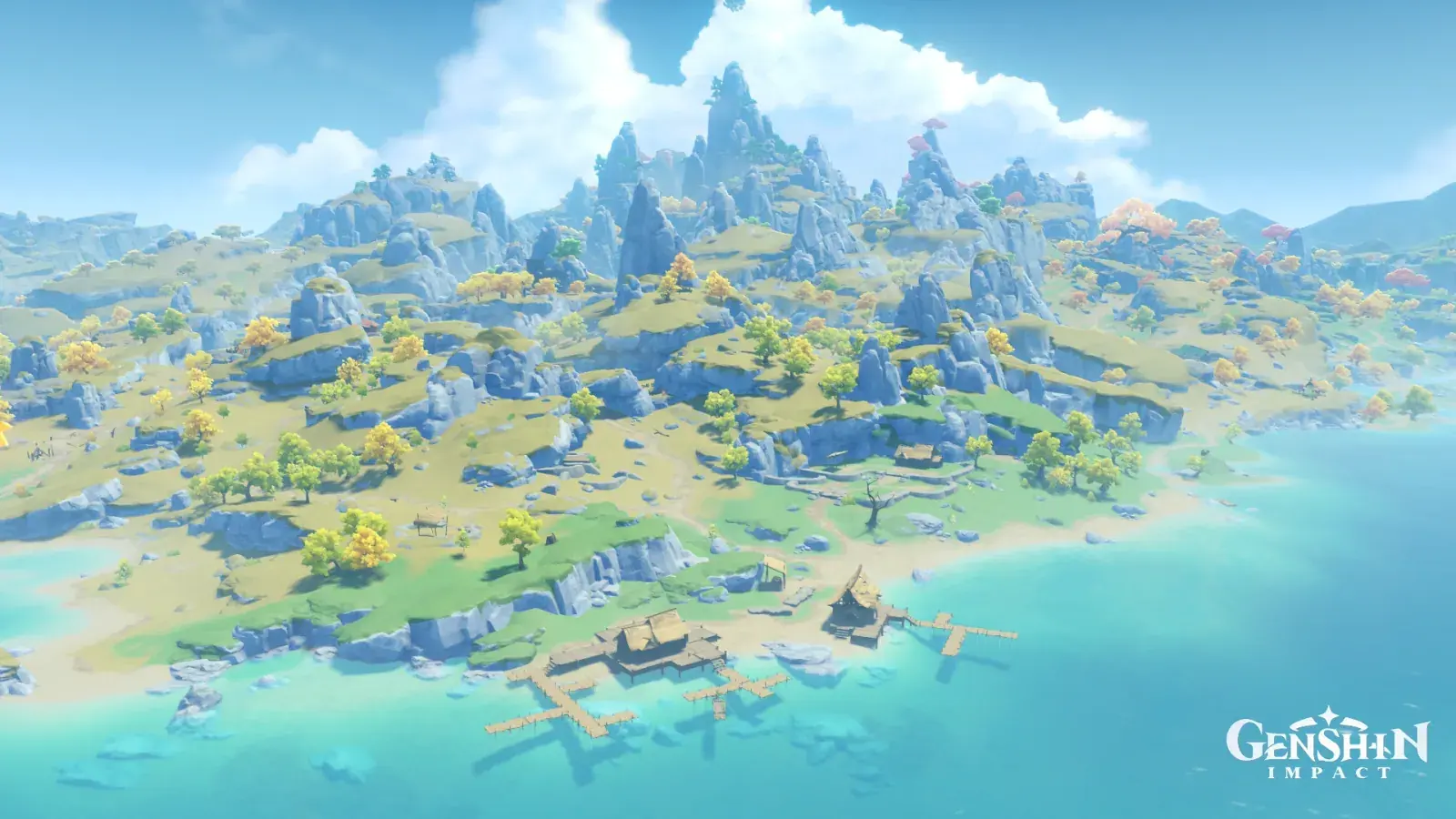
LiyueDayOpenBracingAbundant
Minlin under Cloud White
Palette
Click a swatch to copy its HEX; hover for the OKLCH value.
Reconstructed gradient
The gradient distilled from the scene, unrolled left to right by stop; the authored angle is 175° (used by the hero and exports), while gallery cards share a uniform 135° sweep.
0%fbffff16%7cbee038%dac1bd62%c1c692100%83d5cf
Why it works
The mediator of a wide gamut may have no area at all. The middle answer to the same question is 〈Galesong Hill in Sun and Pine Shade〉: a real band of pine covering 12.08% of the frame, its hue 195° wedged between the two ends, its chroma 0.059 and lightness 0.49 both bottom of the three bands — the quietest step is the mediator. Minlin is the extreme answer to that same question. It spreads three hue families almost evenly (green 22.04%, cyan 22.23%, blue 49.06%, 93.33% together, mean chromas of 0.061 / 0.075 / 0.069 nearly level), yet only 6.25% of the frame is achromatic — less even than Galesong Hill's 8.83%, and nowhere near the 39.47% grey field of 〈Dragonspine, Autumn Snow〉. So what it offers instead is the 4000 brightest pixels: all of them in two cells at top centre, lightness 1.00, chroma 0.005 and 0.006. A field, a band, a point — the mediator can shrink all the way to no area, so long as it is the one thing in the frame that holds no hue position.
Take these colours with you
CSS variables, a Tailwind v4 theme or SVG — one click to copy into your project.
/* Minlin under Cloud White · Minlin under Cloud White — Teyvat Palette */
:root {
  --cloud-white: oklch(1 0.005 200); /* Cloud White #fbffff */
  --minlin-sky: oklch(0.77 0.083 232); /* Minlin Sky #7cbee0 */
  --slope-chartreuse: oklch(0.81 0.07 113); /* Slope Chartreuse #c1c692 */
  --bay-teal: oklch(0.82 0.081 189); /* Bay Teal #83d5cf */
  --pale-maple: oklch(0.83 0.029 28); /* Pale Maple #dac1bd */
  --gradient-minlin: linear-gradient(175deg, oklch(1 0.005 200) 0%, oklch(0.77 0.083 232) 16%, oklch(0.83 0.029 28) 38%, oklch(0.81 0.07 113) 62%, oklch(0.82 0.081 189) 100%);
}A 1080×1350 PNG carrying the scene, its palette and every value — save it and post it as is.