Gallery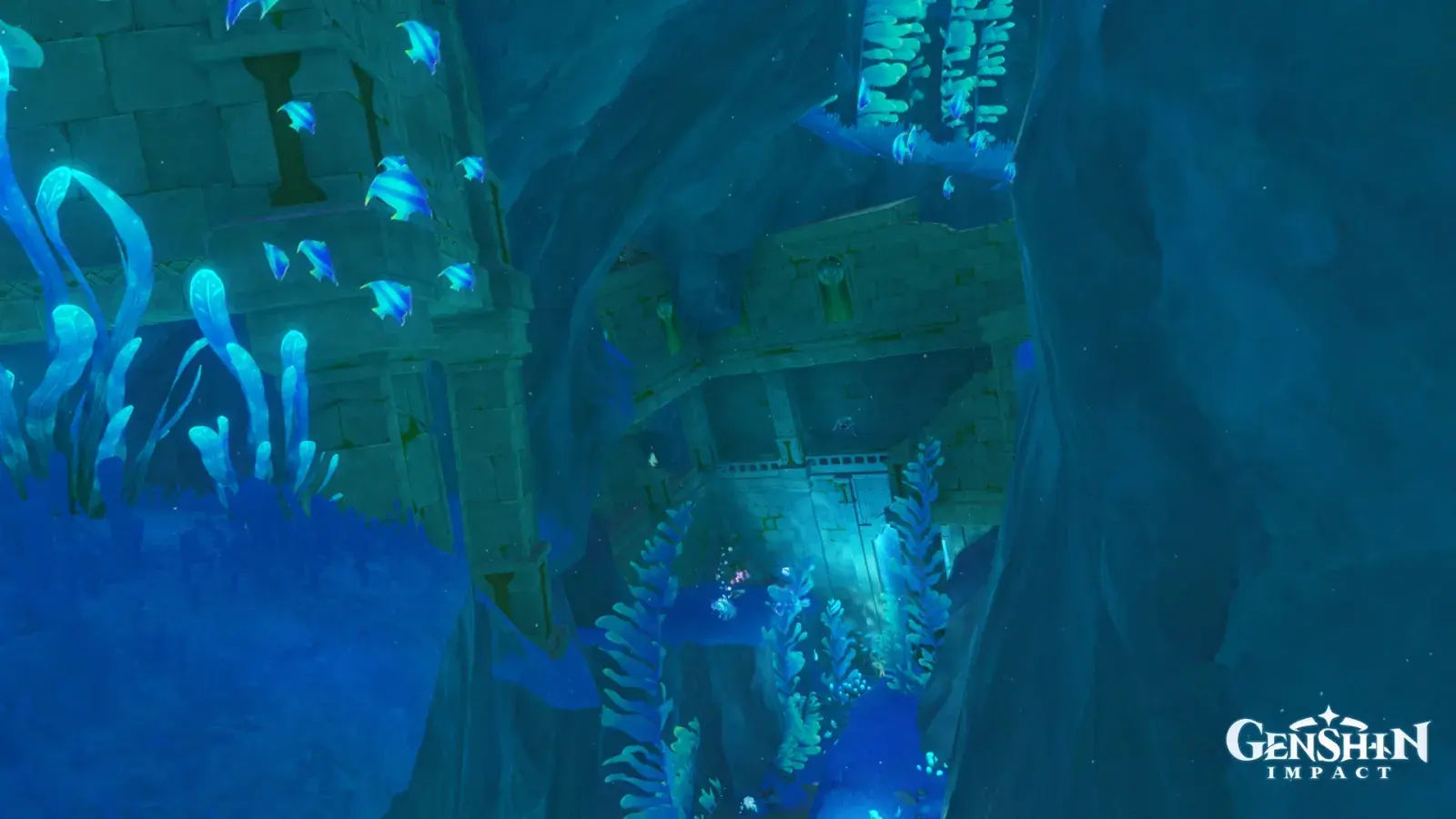
Fontaineabyssalstill waterfaintly lit
Chemin de L'Espoir in Abyssal Light
Palette
Click a swatch to copy its HEX; hover for the OKLCH value.
Reconstructed gradient
The gradient distilled from the scene, unrolled left to right by stop; the authored angle is 225° (used by the hero and exports), while gallery cards share a uniform 135° sweep.
0%024b6a30%025b6358%41dbec78%00e2ef100%0151ab
Why it works
Area, the chroma ceiling, the lightness ceiling — one hue family gets at most two of the three. In this deep water blue takes 84.73% and also holds the chroma peak of 0.250 (the most chromatic 4000 pixels go 4000/4000 to 240°–270°), so the third is handed back whole: the brightest 3584 pixels all fall in 196°–206° and belong to a cyan band covering only 15.14%. Once those are dealt out, everything else in the picture has no channel left: half the pixels are packed into the six points between L 0.33 and 0.39, and hue is all they have to tell each other apart.
Take these colours with you
CSS variables, a Tailwind v4 theme or SVG — one click to copy into your project.
/* Chemin de L'Espoir in Abyssal Light · Chemin de L'Espoir in Abyssal Light — Teyvat Palette */
:root {
  --abyss-blue: oklch(0.39 0.082 235); /* Abyss Blue #024b6a */
  --algal-flare: oklch(0.45 0.159 257); /* Algal Flare #0151ab */
  --coral-glow: oklch(0.83 0.142 202); /* Coral Glow #00e2ef */
  --gate-light: oklch(0.82 0.126 206); /* Gate Light #41dbec */
  --masonry-teal: oklch(0.43 0.073 206); /* Masonry Teal #025b63 */
  --gradient-chemin-de-lespoir: linear-gradient(225deg, oklch(0.39 0.082 235) 0%, oklch(0.43 0.073 206) 30%, oklch(0.82 0.126 206) 58%, oklch(0.83 0.142 202) 78%, oklch(0.45 0.159 257) 100%);
}A 1080×1350 PNG carrying the scene, its palette and every value — save it and post it as is.